Santa Monica · Los Angeles
Advanced Minimally Invasive Veterinary Surgery in Los Angeles
Camera-guided surgery through small access points, when appropriate for your dog or cat. An individual plan, explained with care.
Laparoscopy, endoscopy and arthroscopy.
Laser and magnified surgical visualization.
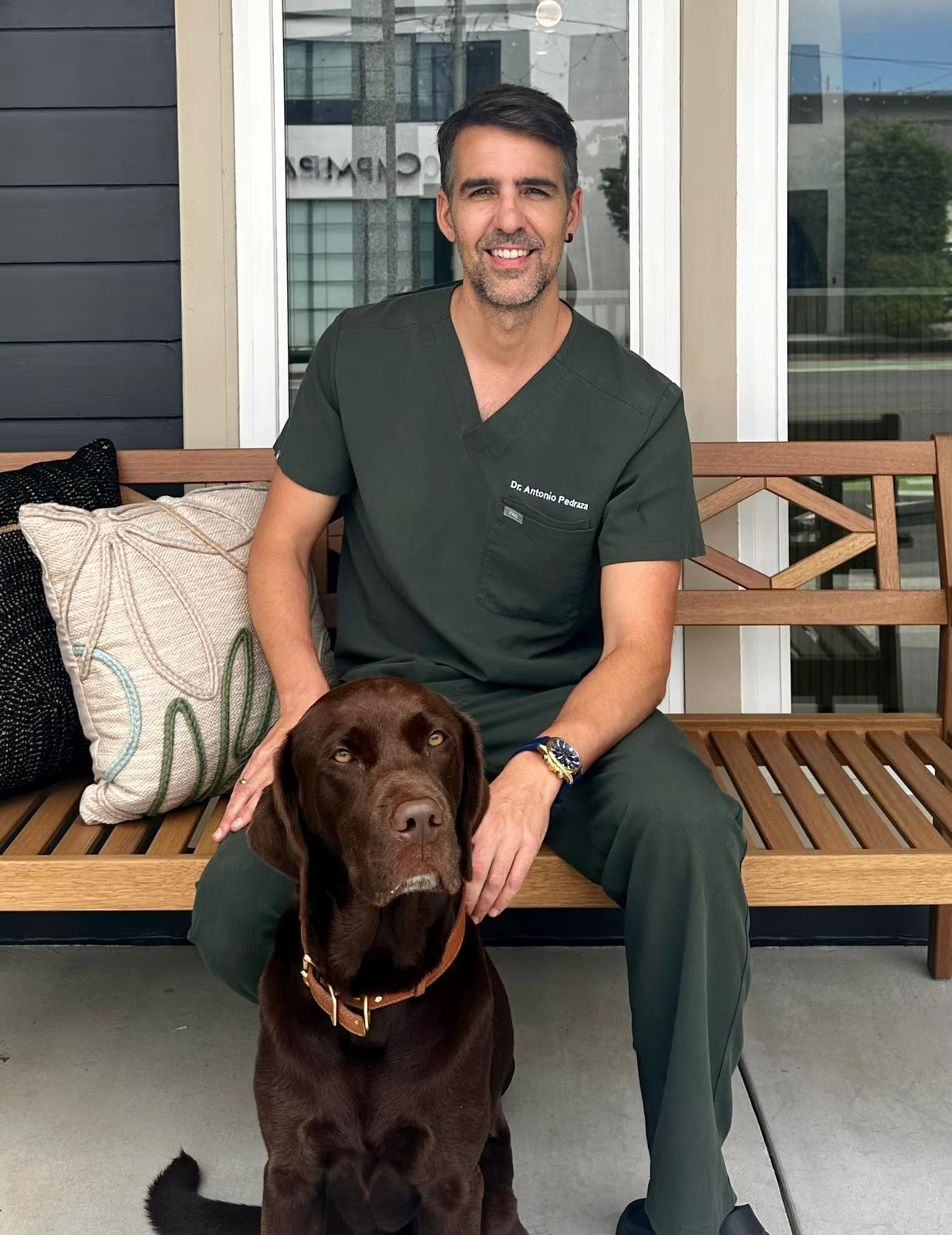
A familiar face.Dr. Antonio Pedraza Veterinary surgeon
2116 Main Street, Santa Monica
Care begins with a conversation.
Referring veterinarians are welcome
Explore our procedures
Surgical approaches, chosen for your companion.
Five ways to see, examine and operate. The clinical question determines which approach deserves consideration.

Laparoscopy
Camera-assisted abdominal surgery using small access points and specialized instruments.
Endoscopy
Internal examination and selected treatments using flexible or rigid scopes.
Laser & Energy Procedures
Focused laser and energy devices selected for specific tissue and surgical objectives.
Arthroscopy
Camera-assisted evaluation and treatment of selected joint conditions.
VITOM Microscope
Exoscopic visualization that provides a magnified surgical field on a monitor.

Gentle hands.
Clear answers.
Dr. Antonio Pedraza
DVM · MVM
Dr. Pedraza combines minimally invasive surgical techniques with clear, honest communication, so you understand the options for your companion.
A surgical foundation Master’s degree in Small Animal Surgery and Traumatology, with post-graduate training in Europe.
Focused experience Laparoscopy, endoscopy, arthroscopy, orthopedic and soft tissue surgery.
At Sevilla Veterinary Hospital in Santa Monica.


A clearer view.
A connected team.
4K imaging brings delicate anatomy into view. Our surgical team works with live imaging and patient monitoring in a sterile environment, with care extending through anesthesia, the procedure and recovery guidance.
- HD laparoscopes, endoscopes and VITOM® exoscopic visualization
- CO₂ laser and advanced energy devices
- Vessel sealing and harmonic instruments
From the first question to follow-up
Care that follows your companion home.
Every case begins with a conversation. The exact sequence varies, with each decision and the instructions for home shaped around your companion.
Consultation and records
Dr. Pedraza reviews the clinical question, available records and imaging, then explains which approaches may warrant discussion.
Case-specific planning
The proposed procedure, alternatives, anesthesia considerations and preparation are organized around the individual companion.
Procedure day
The team uses the planned visualization and instruments with monitored anesthesia. Findings may require the approach to change.
Discharge and follow-up
Families receive written guidance for medication, feeding, activity, incision care and follow-up based on the procedure performed.
Read the recovery guide
Here to help
Good questions. Clear answers.
Your companion’s next chapter starts with a conversation.
Tell Dr. Pedraza and our team what brings you here. We’ll review your request before a consultation or procedure is scheduled.
Referring a patient? Start here.