Santa Monica · Los Angeles
The two most impactful steps in treating brachycephalic breathing problems are opening pinched nostrils and shortening an over-long soft palate. Dr. Antonio Pedraza performs these minimally invasive, laser-assisted corrections in Santa Monica.
- BOAS
- Soft palate
- Nostrils
- Laser surgery

This page is educational and not for emergencies. If your dog is in respiratory distress, has blue or pale gums, or collapses, call an emergency veterinary hospital immediately.
For most flat-faced dogs with brachycephalic obstructive airway syndrome (BOAS), the biggest gains in breathing come from two corrections: widening narrowed nostrils and trimming and thinning an elongated soft palate. These are the structures that block airflow the most — narrowed nostrils are common in French Bulldogs, and an over-long soft palate is the most frequent finding. Because most patients have both problems, the two are usually corrected together in one carefully planned procedure. At Los Angeles Laparoscopy Vet, Dr. Pedraza uses CO₂ laser and energy devices with high-definition visualization to do this precisely and gently. Whether your dog needs one or both depends on an individual evaluation.
Key facts
- Procedures
- Nostril widening (rhinoplasty / alaroplasty) and soft palate surgery (staphylectomy / folding-flap palatoplasty)
- Why these two
- They relieve the biggest airflow restrictions in BOAS
- Often combined with
- Removal of everted laryngeal saccules or tonsils when present
- Technique
- CO₂ laser and energy (vessel-sealing) devices; minimally invasive, advanced visualization
- Recovery planning
- Monitoring, discharge and home care tailored to the patient
- Lead surgeon
- Dr. Antonio Pedraza, DVM, MVM
- Location
- 2116 Main Street, Santa Monica, CA 90405
- Emergency note
- Not an emergency website. If your dog is in respiratory distress, blue-gummed or collapsing, call an emergency veterinarian immediately.
What is soft palate and nostril surgery?
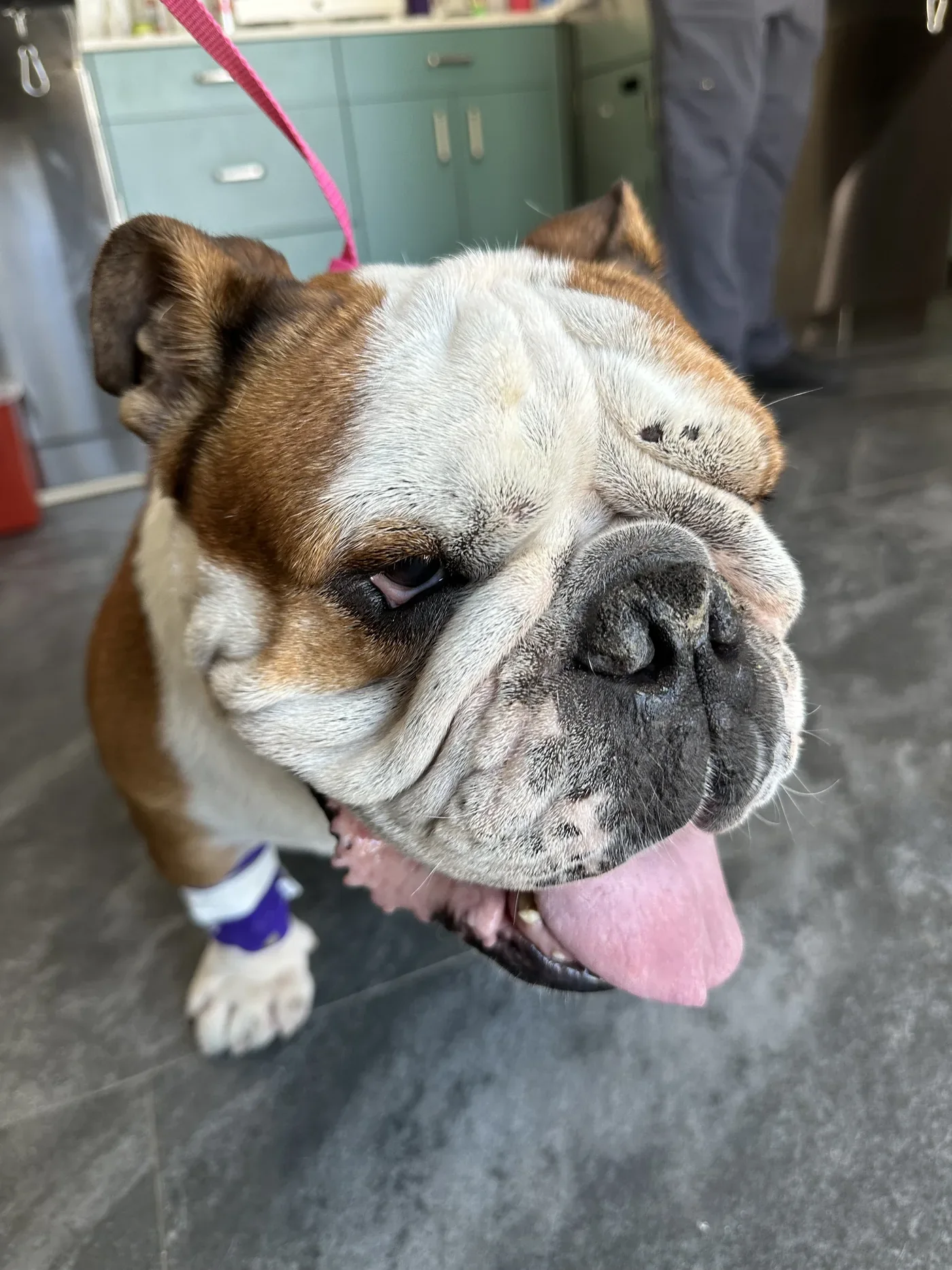
It's a pair of airway corrections that make more room to breathe. Nostril surgery widens the narrowed nasal openings at the front of the airway; soft palate surgery shortens (and, with some techniques, thins) the excess tissue at the back of the mouth that partly blocks the throat. They address the two most common and most obstructive problems in BOAS, which is why they form the core of brachycephalic airway surgery.
Why do the nostrils and soft palate matter most?

Because they create the greatest resistance to airflow. Pinched (stenotic) nostrils substantially increase the effort it takes to breathe in. An elongated soft palate, the most frequent abnormality in these dogs, hangs into the airway and flutters with each breath, causing the classic snoring and snorting. Relieving both removes the bulk of the obstruction for most patients.
Nostril surgery
It reshapes the nostril openings so air can pass more easily. The surgeon removes a small wedge of tissue from the side of each nostril (or uses related techniques) to widen the opening. It may be planned alongside soft palate surgery when both structures contribute to obstruction. The instruments and technique are selected for the individual patient.
Soft palate surgery
It removes the excess length of the soft palate so it no longer obstructs the throat. A traditional staphylectomy trims the over-long edge; a folding-flap palatoplasty also reduces the palate's thickness, which can help dogs whose palate is not just long but bulky (common in French Bulldogs). Dr. Pedraza selects the technique to match your dog's anatomy.
Are the saccules and tonsils treated too?
Sometimes. Chronic obstruction can cause small pouches near the voice box (laryngeal saccules) to turn outward, and the tonsils to evert, adding to the blockage. When these are contributing, they can be removed during the same procedure. Whether that's needed is judged at the time of evaluation and surgery.
Why CO₂ laser and energy devices?

Airway tissue is delicate and prone to swelling, and the working space is small. Laser and energy devices may be selected for tissue handling, with high-definition visualization supporting a detailed view. The choice of instrument does not guarantee less bleeding, a shorter operation or a particular recovery; the plan depends on the airway and correction involved.
What is recovery like?
Airway-surgery patients need close monitoring after the procedure. Monitoring and discharge timing are individualized, and the team explains the observation plan and criteria for going home. Written instructions cover activity, feeding, heat avoidance and follow-up while the airway heals. Many owners notice quieter, easier breathing soon after healing. Dr. Pedraza provides specific instructions and a direct follow-up.
What results can we expect?

Owners commonly report improvement in breathing, energy and sleep. To be candid, surgery improves the airway rather than making a flat-faced dog's anatomy normal, and some dogs remain partially affected — especially if advanced secondary changes are already present. Lifelong weight and heat management stay important. This procedure is part of our laser & energy procedures; for the wider picture see our brachycephalic airway (BOAS) surgery page, the French Bulldog decision guide and our guide to caring for a brachycephalic dog. Learn more about Dr. Pedraza or contact our Santa Monica clinic.
What to expect
- 1
Consultation
Dr. Pedraza assesses the airway and explains which corrections are appropriate.
- 2
Planning & diagnostics
Pre-op blood work and, when useful, imaging or endoscopy shape the plan.
- 3
Minimally invasive surgery
Nostrils and soft palate (and saccules/tonsils if needed) are corrected with laser and energy tools, usually in one procedure.
- 4
Recovery guidance
Discharge follows clinical assessment, with clear home-care instructions and follow-up to assess healing.
Typical tendencies — every recommendation depends on an individual evaluation.
This page is educational and not for emergencies. If your dog is in respiratory distress, has blue or pale gums, or collapses, call an emergency veterinary hospital immediately.
Frequently asked questions
Clinical background and sources
These resources explain the general techniques and care considerations. Your veterinary team determines how they apply to your companion and the proposed procedure.
American College of Veterinary Surgeons
Brachycephalic SyndromeAirway anatomy, clinical signs, evaluation and surgical options for brachycephalic animals.
American Animal Hospital Association
2020 AAHA Anesthesia and Monitoring Guidelines for Dogs and CatsIndividual pre-anesthetic assessment, monitoring and the transition into recovery.
This page is educational and does not replace an individual veterinary examination. It is not for emergencies — if your companion is in distress, contact an emergency veterinary hospital. Los Angeles Laparoscopy Vet at Sevilla Veterinary Hospital, 2116 Main Street, Santa Monica.