
A laparoscopic spay — also called a keyhole spay or lap spay — removes a dog's ovaries through small incisions, guided by a magnified HD camera, instead of through one longer opening in the belly. At Los Angeles Laparoscopy Vet, a service of Sevilla Veterinary Hospital at 2116 Main Street in Santa Monica, Dr. Antonio Pedraza performs laparoscopic spays for dogs from across Los Angeles and the Westside.
Every plan starts with a free surgical consultation and an individual assessment of your dog. If a keyhole spay is the right fit, you receive a flat, all-inclusive written quote before anything is scheduled.
- Procedure
- Laparoscopic ovariectomy: both ovaries are removed through small keyhole incisions
- Who it is for
- Dogs whose examination and pre-anesthetic assessment support the approach
- Visualization
- Magnified HD laparoscopic camera
- Vessel sealing
- Advanced bipolar vessel-sealing devices such as LigaSure™ and ENSEAL®
- Anesthesia
- Individualized anesthesia and pain management plan, with an anesthesia ventilator and advanced monitoring
- Can be combined with
- Laparoscopic-assisted gastropexy for large and giant breeds at risk of bloat
- Planning and payment
- Free surgical consultation, flat all-inclusive written quote, CareCredit accepted
- Location
- Sevilla Veterinary Hospital, 2116 Main Street, Santa Monica, CA 90405 · (310) 310-3704
What is a laparoscopic spay?
A spay ends heat cycles and prevents unwanted litters by removing the ovaries. In a laparoscopic spay, Dr. Pedraza performs an ovariectomy: a slim camera (the laparoscope) and fine instruments pass through one or two small ports, and the abdomen is gently inflated with carbon dioxide to create working space. The camera sends a magnified, well-lit image to a monitor, so each ovary is located, sealed and removed under direct vision.
The uterus is usually left in place. According to ACVS guidance (listed under Clinical background and sources below), recent literature has shown no long-term difference in outcome between ovariectomy and ovariohysterectomy (removal of the ovaries and the uterus), and the two procedures can be considered essentially equivalent.
The keyhole spay is one of several laparoscopic procedures for dogs and cats available at our Santa Monica clinic, alongside cryptorchid neuter and gastropexy.
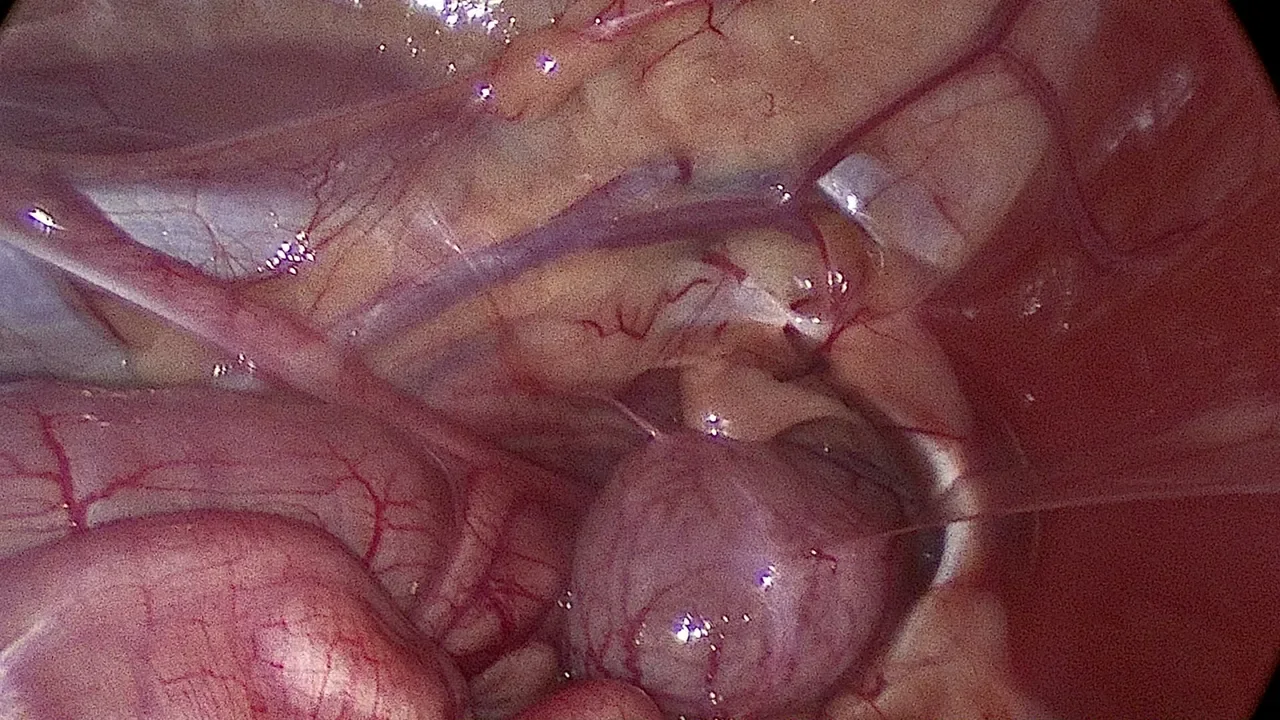
View clinical image: laparoscopic anatomy
Laparoscopic vs traditional spay at a glance
Both approaches end heat cycles and prevent unwanted litters. The differences lie in how the surgery is done:
Scroll horizontally to read all columns.
| Aspect | Laparoscopic spay | Traditional spay |
|---|---|---|
| Incisions | 1–2 small keyhole incisions, often around 5 mm | One longer incision along the midline of the belly |
| View | Magnified HD camera image on a monitor | Direct view through the abdominal incision |
| Ovarian ligament | Sealed and cut under magnified view | Usually stretched or broken by hand so the ovary can be lifted to the incision |
| What is removed | Usually the ovaries only (ovariectomy) | The ovaries, and often the uterus (ovariohysterectomy) |
| Recovery plan | Pain management, incision protection and activity limits set for your dog | Pain management, incision protection and activity limits set for your dog |
Laparoscopy does not remove surgical or anesthetic risk, and it is not the right choice for every dog. For incisions, tissue handling, ovariectomy vs ovariohysterectomy and how estimates differ, read our full laparoscopic vs traditional spay comparison.
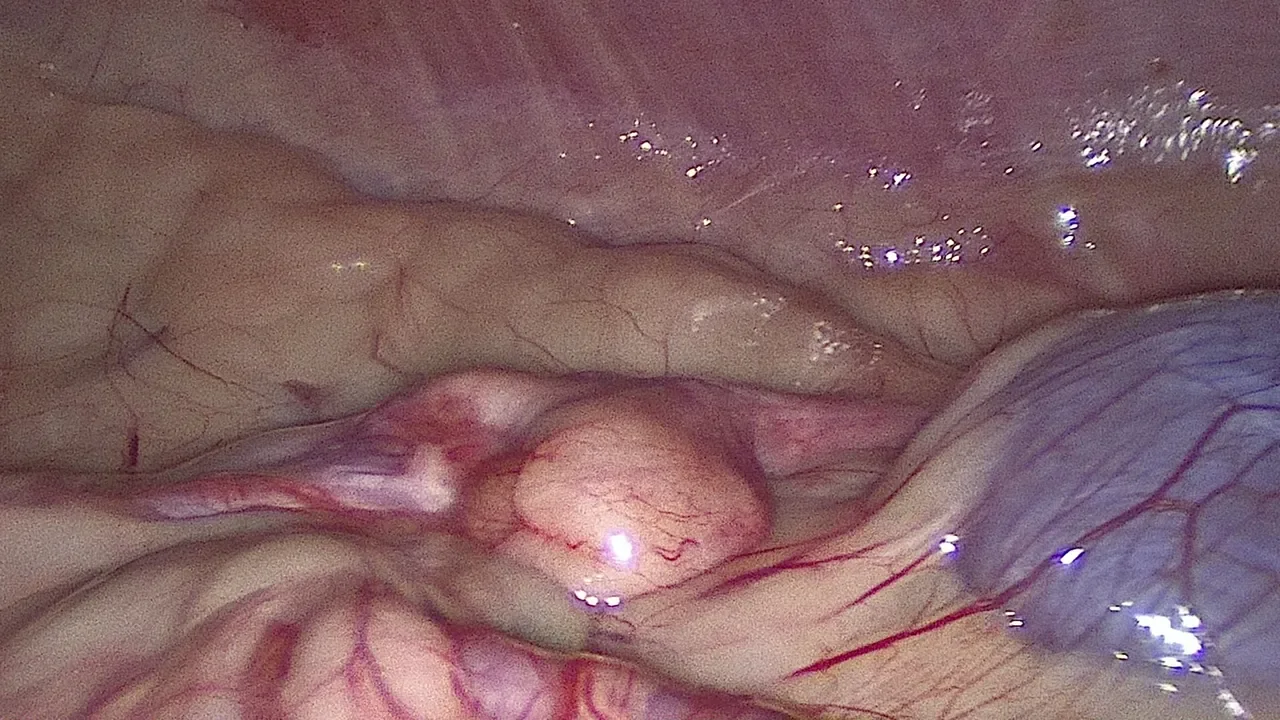
View clinical image: ovary detail
Is my dog a candidate?
Many healthy dogs are candidates for a laparoscopic spay, but the decision is always individual. At your free consultation, Dr. Pedraza reviews your dog's history, examination, records and any recommended bloodwork or imaging, together with breed, age, body condition, orthopedic considerations and any previous abdominal surgery. You then get a clear recommendation — laparoscopic or traditional — and the reasoning behind it.
Families often ask about a keyhole spay for:
- Healthy young adult and middle-aged dogs, with timing matched to breed and expected adult size
- Large and giant breeds at risk of bloat, especially when a preventive gastropexy is planned at the same time
- Families who prefer smaller incisions, when the approach is appropriate for their dog
A traditional spay may be the safer recommendation in some situations — for example, when there are signs of uterine disease and the uterus needs to be removed as well. Occasionally, a procedure that starts laparoscopically is converted to an open approach for safety; Dr. Pedraza discusses this possibility with you in advance. If your dog is in heat or could be pregnant, let the team know when you book, as this can affect timing.
If your dog has a primary-care veterinarian, we are glad to share records and updates with them as part of collaborative care.
The procedure, step by step
Free surgical consultation
Dr. Pedraza examines your dog, answers your questions and confirms whether a keyhole spay fits, and you receive a written quote for the recommended plan.
Pre-anesthetic assessment
Bloodwork and, when indicated, in-house digital X-rays help confirm that your dog is ready for anesthesia and shape her individualized anesthesia and pain management plan.
Preparing at home
You receive fasting, water and medication instructions for the day before. Confirm the timing with the team, and use our preparation checklist for what to bring.
Anesthesia and monitoring
On the day, your dog is admitted and settled. Throughout anesthesia, an anesthesia ventilator supports breathing when needed, and advanced monitoring tracks vital signs such as heart rhythm, blood pressure, oxygen, carbon dioxide and temperature.
Keyhole access and HD visualization
One or two small ports are placed, the abdomen is gently inflated with carbon dioxide, and the laparoscope gives a magnified view of each ovary.
Sealing and removal
The blood vessels and the ovarian ligament are sealed with advanced bipolar vessel-sealing devices such as LigaSure™ and ENSEAL®, and each ovary is removed through a port.
Closure and waking up
The small incisions are closed and your dog wakes up under close observation. The team assesses her recovery from anesthesia before deciding when she is ready to go home, and walks you through her home-care instructions.

A laparoscopic camera provides a magnified view of abdominal structures. The approach and examination depend on the individual patient and procedure.
View clinical video: laparoscopic abdominal exploration
Silent laparoscopic footage. A circular camera view moves across internal tissue surfaces, changing angle and distance during the examination.
Recovery after a laparoscopic spay
Small incisions still need time to heal, and every dog recovers at her own pace. Before discharge, the team explains your dog's medication, feeding, incision care and activity plan. In general:
- Expect some sleepiness on the first evening, and offer water and food as instructed.
- Give medication exactly as prescribed, and never give human pain relievers.
- Protect the incisions from licking with an e-collar or recovery suit, if advised.
- Keep to short leashed bathroom breaks — no running, jumping, rough play, swimming or off-leash time until Dr. Pedraza clears it.
- Attend the recheck so healing can be confirmed before normal activity resumes.
For practical detail on the first days at home — incision checks, cones and recovery suits, and the signs that mean you should call — read our guide to laparoscopic spay recovery at home.
Combining a spay with gastropexy
Large, deep-chested breeds — such as Great Danes, German Shepherds, Standard Poodles, Weimaraners, Boxers and Dobermans — are the dogs most prone to gastric dilatation-volvulus (GDV, or bloat), a life-threatening emergency in which the stomach fills with gas and twists. A preventive gastropexy secures the stomach to the body wall to reduce the risk of twisting.
For dogs at risk, a laparoscopic-assisted gastropexy can be performed during the same anesthetic as the laparoscopic spay, so your dog has one anesthetic event and one recovery period instead of two. Dr. Pedraza explains how adding it changes the anesthesia plan, the recovery and your quote. Gastropexy does not stop the stomach from filling with gas, so a swollen belly or repeated unproductive retching still needs urgent veterinary care. Learn more about laparoscopic-assisted gastropexy for dogs at risk of bloat.
What your written estimate includes
Cost depends on your dog's size and health and on the plan Dr. Pedraza recommends — for example, whether a gastropexy is added. After the free surgical consultation, you receive a flat, all-inclusive written quote for that plan, so you know the total before you schedule. Ask the team to walk you through what it covers, such as:
- Pre-anesthetic bloodwork and any imaging
- Anesthesia, monitoring and pain management
- The laparoscopic spay itself, including vessel sealing
- Medication to take home and an e-collar or recovery suit
- Your dog's recheck visit
CareCredit is accepted. If your dog is insured, you can share the written quote with your insurer to check coverage, as policies vary. For a broader view, read what affects the cost of minimally invasive surgery.
Why families choose Dr. Pedraza
Dr. Antonio Pedraza, DVM, MVM, Cert SAS, MRCVS, brings advanced European postgraduate training with a dedicated focus on laparoscopic and minimally invasive techniques, and leads both your dog's consultation and the procedure.
- Transparent planning: a free surgical consultation, one flat all-inclusive quote and CareCredit accepted
- Individualized anesthesia and pain management, with an anesthesia ventilator and advanced monitoring
- HD laparoscopy with advanced bipolar vessel-sealing devices such as LigaSure™ and ENSEAL®
- In-house digital X-ray when imaging is indicated
- More than spays: laparoscopic cryptorchid neuter and laparoscopic-assisted gastropexy
- Collaborative care with your primary-care veterinarian
Sevilla Veterinary Hospital is on Main Street in Santa Monica, and we welcome dogs from Venice, Brentwood, Pacific Palisades, Marina del Rey, Culver City, West Los Angeles, Beverly Hills and across Los Angeles. Meet Dr. Pedraza.
Book a free surgical consultation in Santa Monica
Call (310) 310-3704 or request a free laparoscopic spay consultation online. Families can book directly, and the team will confirm your appointment with you. Prefer to ask a question first? Contact our Santa Monica clinic.
Frequently asked questions
Clinical background and sources
These resources explain the general techniques and care considerations. Your veterinary team determines how they apply to your companion and the proposed procedure.
American College of Veterinary Surgeons
OvariohysterectomyOvariectomy and ovariohysterectomy, including open and laparoscopic approaches and general aftercare.
American Animal Hospital Association
2020 AAHA Anesthesia and Monitoring Guidelines for Dogs and CatsIndividual pre-anesthetic assessment, monitoring and the transition into recovery.
This page is educational and does not replace an individual veterinary examination. It is not for emergencies — if your companion is in distress, contact an emergency veterinary hospital. Los Angeles Laparoscopy Vet at Sevilla Veterinary Hospital, 2116 Main Street, Santa Monica.